
Methods for identifying textile fabrics
Textile fabric identification can primarily be approached from three dimensions: the composition of the textile fabric, the front and back sides of the textile fabric, as well as the warp and weft directions, and the appearance quality of the textile fabric. By identifying these three major aspects, fabric buyers can find high-quality and cost-effective fabrics. Next, our editor will introduce the specific methods of these three major identification methods in detail. Learn them well~
Identification of textile fabric components
picture
1. Sensory identification method
(1) Main methods
Visual inspection: Utilizing the visual effect of the eyes, observe the fabric's luster and shading, dyeing condition, surface roughness, as well as the appearance characteristics of its weave, texture, and fibers.
Hand touch: Utilizing the tactile effect of the hand, one can perceive the softness, smoothness, roughness, fineness, elasticity, warmth, and coolness of the fabric. By hand, one can also detect the strength and elasticity of the fibers and yarns within the fabric.
Hearing and smelling: Auditory and olfactory senses can help in judging the raw materials of certain fabrics. For example, silk has a unique sound; different fabrics made of various fibers produce different tearing sounds; and acrylic and wool fabrics have different smells.
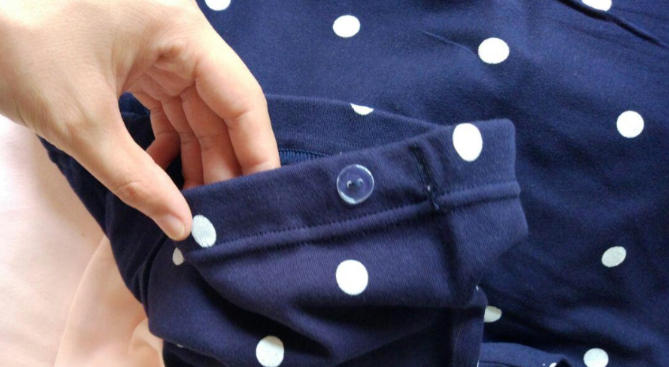
The first step is to preliminarily distinguish the general category of the fiber or fabric.
Step two, further determine the type of raw material based on the sensory characteristics of the fibers in the fabric.
Step three, make a final judgment based on the sensory characteristics of the fabric.
Step 4: Verify the judgment results. If there is uncertainty about the judgment, other methods can be used for verification. If the judgment is incorrect, sensory identification can be repeated or combined with other methods for identification.
2. Combustion identification method
Combustion characteristics of common textile fibers
picture
Cotton fibers ignite immediately upon contact with fire, burning rapidly and producing a yellow flame with an odor. They emit a slight grayish-white smoke and can continue to burn even after being removed from the fire. After the flame is extinguished by blowing, sparks may continue to burn for a short period of time. After combustion, the fibers retain their original fluffy shape and are easily crumbled into loose ash when touched. The ash is a gray, fine, and soft powder, and the charred parts of the fibers are black.
② Hemp fiber burns rapidly, softens without melting or shrinking, producing a yellow or blue flame with a burning grass-like odor; it continues to burn rapidly once removed from the flame; the ash is minimal, appearing as light gray or white ash powder.
③ Wool does not immediately burn when exposed to a flame. It first curls up, then emits smoke, and finally, the fibers ignite and burn. The flame appears orange-yellow, and the burning speed is slower than that of cotton fibers. Once removed from the flame, it immediately stops burning and is not prone to continue burning. It emits a foul odor similar to burning hair and feathers. The ash does not retain the original fiber shape, but instead appears as irregular or spherical glossy black-brown brittle pieces that crumble easily under finger pressure. There is a large amount of ash, which emits an odor during combustion.
④ Silk burns relatively slowly, melting and curling, shrinking into a ball as it burns, emitting a foul odor akin to burning hair; it slightly glows when removed from the flame, burning slowly and sometimes self-extinguishing; the ash is black-brown, crumbly, and crisp, easily crushing under finger pressure.
⑤ Viscose fiber has a combustion behavior that is basically similar to cotton, but its burning speed is slightly faster than cotton fiber, with less ash and sometimes not easily maintaining its original shape. When burning, viscose fiber emits a slight hissing sound.
⑥ Acetate fiber burns quickly, producing sparks. It melts and burns simultaneously, emitting a pungent acetic acid odor during combustion. When removed from the flame, it continues to melt and burn. The ash is black, shiny, and irregularly shaped, and can be crushed with a finger.
⑦ Cuprammonium fiber burns rapidly, without melting or shrinking, emitting the odor of burning paper; it continues to burn rapidly even after leaving the flame; the ash is minimal, appearing light gray or off-white.
⑧ When nylon is brought close to a flame, it causes the fibers to contract. Upon contact with the flame, the fibers quickly curl and melt into a transparent gel-like substance, accompanied by small bubbles.
⑨ Acrylic fiber melts and burns simultaneously, with a fast burning speed; the flame is white, bright, and powerful, sometimes accompanied by slight black smoke; it emits a fishy odor or pungent smell similar to burning coal tar; it continues to burn after leaving the flame, but at a slower rate; the ash is black-brown, irregular, brittle, and easily crumbles in the fingers.
⑩ Vinylon fibers contract rapidly when burning, burning slowly with a small flame and almost no smoke; when the fibers melt in large quantities, a large dark yellow flame with small bubbles will be produced; it emits a special odor of acetylene gas when burning; it continues to burn after leaving the flame, sometimes self-extinguishing; the ash is black-brown, irregular, brittle, and small beads that can be crushed between fingers.
⑪Polypropylene fibers, while being rolled up, melt and burn slowly; they exhibit a bright blue flame, emit thick black smoke, and drip with gel-like substances; they have a scent similar to burning paraffin; once removed from the flame, they continue to burn, sometimes self-extinguishing; the ash is irregularly shaped, hard, transparent, and not easily crumbled by fingers.
⑫ Chlorofiber is difficult to ignite; it melts and burns in a flame, emitting thick black smoke; it immediately goes out once removed from the flame and cannot continue to burn; it emits a pungent, unpleasant chlorine odor during combustion; the ash is irregular, dark brown hard blocks that are not easily crumbled by fingers.
⑬ Spandex, when approached by a flame, initially expands into a circular shape before contracting and melting; it melts and burns in the flame, with a relatively slow burning rate and a yellow or blue flame; as it moves away from the flame, it melts and burns simultaneously, gradually self-extinguishing; it emits a distinctive pungent odor during combustion; the ash is white, sticky, and in the form of clumps.
3. Density gradient method
The identification process of the density gradient method is as follows: First, prepare the density gradient solution by appropriately mixing two liquids of different densities that can mix with each other. Generally, xylene is used as the light liquid and carbon tetrachloride as the heavy liquid. Leveraging diffusion, molecules of the light liquid and heavy liquid diffuse at the interface between the two liquids, forming a density gradient solution with a continuous change in density from top to bottom in the density gradient tube. Use standard density spheres to calibrate the density values at various heights. Then, pretreat the textile fibers to be tested by deoiling and drying, form them into spheres, and sequentially put the spheres into the density gradient tube to measure the fiber density values. Compare these values with the standard density of the fibers to identify the fiber type. Since the density gradient solution changes with temperature, it is essential to maintain a constant temperature during the test.
4. Microscope observation method
picture
By observing the longitudinal morphology of textile fibers under a microscope, one can distinguish the general category to which they belong; by observing the cross-sectional morphology of textile fibers, one can determine the specific name of the fiber.
5. Dissolution method
picture
For pure spinning fabrics, when identifying, a certain concentration of chemical reagent should be added to a test tube containing the textile fibers to be identified. Then, observe and carefully distinguish the dissolution conditions of the textile fibers (dissolved, partially dissolved, slightly dissolved, or undissolved), and carefully record the temperature during dissolution (dissolved at room temperature, dissolved upon heating, dissolved upon boiling).
For blended fabrics, identification requires first dismantling the fabric into individual textile fibers. These fibers are then placed on a concave-surfaced glass slide, unfolded, and a chemical reagent is applied. The fibers are then observed under a microscope to observe the dissolution of the component fibers and determine their type.
Since the concentration and temperature of chemical solvents have a relatively significant impact on the solubility of textile fibers, strict control of the concentration and temperature of chemical reagents should be maintained when using the dissolution method to identify textile fibers.
6. Reagent staining method
picture
The reagent staining method is a rapid method for identifying different types of textile fibers based on their varying staining properties towards a specific chemical reagent. This method is only applicable to undyed or pure spun yarn and fabrics. For colored textile fibers or fabrics, progressiveness decolorization is necessary.
7. Melting point method
picture
The melting point method relies on the different melting characteristics of various synthetic fibers. By measuring their melting points using a melting point instrument, the types of textile fibers can be identified. Most synthetic fibers do not have a precise melting point, and the melting point of the same type of synthetic fiber is not a fixed value. However, the melting point is basically fixed within a relatively narrow range. Therefore, the type of synthetic fiber can be determined based on its melting point. This is one of the methods for identifying synthetic fibers. This method is generally not used alone, but as an auxiliary method for confirmation after preliminary identification, and is only applicable to pure spun synthetic fiber fabrics that have not undergone anti-melting treatment.
picture
Identification of the front and back sides, as well as the warp and weft directions, of textile fabrics
picture
1. Identification of the front and back sides of textile fabrics
It can be roughly divided into identification based on the organizational structure of textile fabrics (plain weave, twill weave, satin), identification based on the appearance effect of textile fabrics (printed fabric, voile fabric, towel fabric), identification based on the pattern of textile fabrics, identification based on the selvedge characteristics of textile fabrics, identification based on the appearance effect of textile fabrics after special finishing (pile fabric, double-layer multi-layer fabric, burnout fabric), identification based on the trademark and seal of textile fabrics, and identification based on the packaging form of textile fabrics;
2. Identification of warp and weft directions of textile fabrics
It can be identified based on the fabric edge of the textile fabric, the density of the textile fabric, the raw material of the yarn, the twist direction of the yarn, the structure of the yarn, the sizing condition, the reed mark, the density, twist direction, and twist of the warp and weft yarn of the fabric, and the elasticity of the fabric.
picture
Identification of the appearance quality of textile fabrics
picture
1. Textile fabric defect recognition
The defects of textile fabrics include broken warp, sinking yarn, skipped stitches, edge fraying, cobwebs, holes, roving, slub yarn, bulging yarn, double weft, tightly twisted yarn, uneven yarn consistency, thin areas, sparse weft, thin sections, dense areas, thick sections, edge defects, cotton impurities, stains, color stripes, horizontal stripes, missing weft, multiple feet, creases, shuttle marks, scratching, miswefting, loose warp, reed marks, reed misalignment, narrow width, reverse twill, inconsistent pattern, color difference, color stripes, stripes, streaks, inconsistent pattern, shading and fine dots, skewing, printing deviation, desizing, color mottling, and staining. These defects can be identified based on their appearance characteristics.
2. Identification of deteriorated textile fabrics
The main methods are observing, touching, listening, smelling, and licking.
Observe the color and shape of the fabric, and check for any signs of deterioration, such as wind stains, oil stains, water spots, mold spots, color contamination, discoloration, or unusual characteristics that deviate from the normal appearance of the fabric.
Touch and grip the fabric tightly with your hand to feel if there are any signs of deterioration such as stiffness, dampness, stickiness, or warmth.
Listen, compare the sound produced by tearing the fabric with the crisp sound produced by normal fabric. If the sound is hoarse, muddy, or silent, it may indicate deterioration.
Smell: Smell the fabric to determine whether it has deteriorated. Except for fabrics that have undergone special treatments (such as being coated with water repellent agents or treated with resin), any unusual odor, such as sour, moldy, or bleach powder smell, indicates that the fabric has deteriorated.
Lick: If the fabric smells moldy or sour after being licked with the tongue, it indicates that it has already gone moldy.
Mastering these methods will make you no longer a rookie in fabric identification. Recognizing fabrics is a task that can be easily accomplished in no time.